




Texas Instruments CC1352R SimpleLink Multi-Band Wireless MCU
Texas Instruments CC1352R SimpleLink Multi-Band Wireless Microcontroller (MCU) is a multi-protocol Sub-1 and 2.4GHz wireless MCU. This MCU targets Wireless M-Bus, IEEE 802.15.4g, IPv6-enabled smart objects (6LoWPAN), Thread, Zigbee®, KNX RF, Wi-SUN®, BLUETOOTH® 5 Low Energy, and proprietary systems, including the TI 15.4-Stack. The CC1352R device is a member of the SimpleLink™ MCU platform of cost-effective, ultra-low power, 2.4GHz, and Sub-1GHz RF devices. Very low active RF and microcontroller (MCU) current and sub-µA sleep current with up to 80KB of parity-protected RAM retention provide excellent battery lifetime and allow operation on small coin-cell batteries and in energy-harvesting applications.
The Texas Instruments CC1352R device combines a flexible, very low-power RF transceiver with a powerful 48MHz Arm® Cortex®-M4F CPU in a platform supporting multiple physical layers and RF standards. A dedicated Radio Controller (Arm Cortex-M0) handles low-level RF protocol commands stored in ROM or RAM, thus ensuring ultra-low power and great flexibility. The low power consumption of the CC1352R device does not come at the expense of RF performance; the CC1352R device has excellent sensitivity and robustness (selectivity and blocking) performance. The flexible radio of the CC1352R enables concurrent time-multiplexed multi-protocol and multi-band operation through the Dynamic Multi-Protocol Manager (DMM) driver. The CC1352R device is a highly integrated, true single-chip solution incorporating a complete RF system and an on-chip DC/DC converter.
Features
- Microcontroller
- Powerful 48MHz Arm Cortex-M4F processor
- EEMBC CoreMark® Score: 148
- 352KB of in-system programmable flash
- 256KB of ROM for protocols and firmware
- 8KB of cache SRAM (alternatively available as general-purpose RAM)
- 80KB of ultra-low leakage SRAM with parity
- 2-pin cJTAG and JTAG debugging
- Supports Over-the-Air Upgrade (OTA)
- Ultra-low power sensor controller with 4KB of SRAM
- Sample, store, and process sensor data
- Operation independent from system CPU
- Fast wakeup for low-power operation
- TI-RTOS, drivers, bootloader, Bluetooth 5 Low Energy controller, and IEEE 802.15.4 MAC in ROM for optimized application size
- RoHS-compliant package
- 7mm×7mm RGZ VQFN48 (28 GPIOs)
- Peripherals
- Digital peripherals can be routed to any GPIO
- 4× 32-bit or 8× 16-bit general-purpose timers
- 12-bit ADC, 200k samples/s, eight channels
- 2× comparators with internal reference DAC (1× continuous time, 1× ultra-low power)
- Programmable current source
- 2× UART
- 2× SSI (SPI, MICROWIRE, TI)
- I2C
- I2S
- Real-Time Clock (RTC)
- AES 128 and 256-bit crypto accelerator
- ECC and RSA public key hardware accelerator
- SHA2 accelerator (full suite up to SHA-512)
- True Random Number Generator (TRNG)
- Capacitive sensing, up to eight channels
- Integrated temperature and battery monitor
- External system
- On-chip buck DC/DC converter
- Low power
- 1.8V to 3.8V wide supply voltage range
- Active-mode RX: 5.8mA (3.6V, 868MHz), 6.9mA (3.0V, 2.4GHz)
- Active-mode TX 0dBm: 8.0mA (3.6V, 868MHz), 7.1mA (3.0V, 2.4GHz)
- Active-mode TX at +14dBm: 24.9mA (868MHz)
- Active-mode MCU 48MHz (CoreMark): 2.9mA (60µA/MHz)
- Sensor controller, low power-mode, 2MHz, running infinite loop: 30.8µA
- Sensor controller, active-mode, 24MHz, running infinite loop: 808µA
- Standby: 0.85µA (RTC on, 80KB RAM and CPU retention)
- Shutdown: 150nA (wakeup on external events)
- Radio section
- Dual-band sub-1GHz and 2.4GHz RF transceiver compatible with Bluetooth 5 Low Energy and IEEE 802.15.4 PHY and MAC
- Excellent receiver sensitivity
- –121dBm for SimpleLink long-range mode
- –110dBm at 50kbps, –105dBm for Bluetooth 125kbps (LE Coded PHY)
- Excellent selectivity (48dB at 50kbps)
- Output power up to +14dBm (Sub-1GHz) and +5dBm (2.4GHz) with temperature compensation
- Suitable for systems targeting compliance with worldwide radio frequency regulations
- ETSI EN 300 220 receiver Category 1.5 and 2, EN 300 328, EN 303 131, EN 303 204 (Europe)
- EN 300 440 Class 2 (Europe)
- FCC CFR47 Part 15 (US)
- ARIB STD-T108 and STD-T66 (Japan)
- Wide standard support
Applications
- 433, 470 to 510, 868, 902 to 928, and 2400 to 2480MHz ISM and SRD systems with down to 4kHz of receive bandwidth
- Home and building automation
- Building security systems – motion detector, electronic door lock, door and window sensor, gateway
- HVAC – thermostat, wireless environmental sensor, HVAC system controller
- Fire safety systems – smoke detector, fire alarm control panel
- Video surveillance – IP camera
- Garage door openers
- Elevator and escalator control
- Smart grid and automatic meter reading
- Water, gas, and electricity meters
- Heat cost allocators
- Gateways
- Wireless sensor networks
- Long-range sensor applications
- Asset tracking and management
- Factory automation
- Wireless healthcare applications
- Energy harvesting applications
- Electronic Shelf Label (ESL)
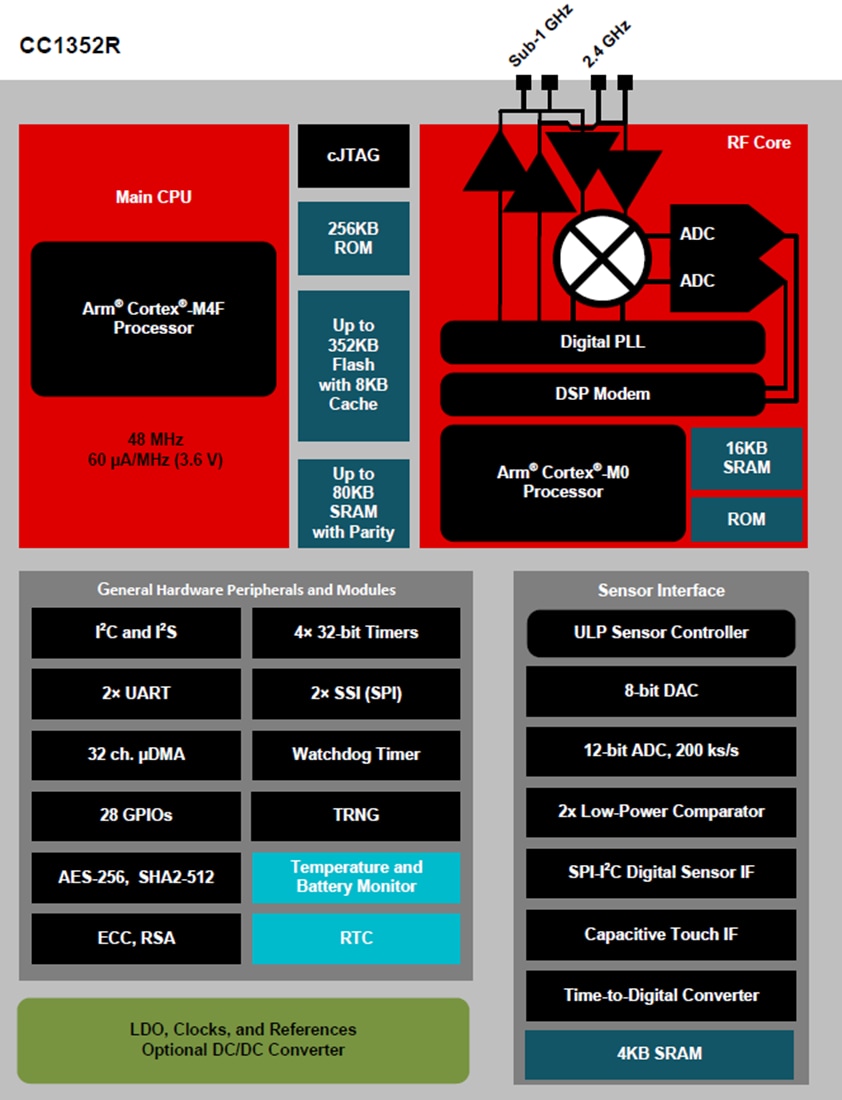
Functional Block Diagram
Related Development Tools
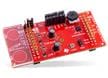
Texas Instruments BOOSTXL-ULPSENSE Sensor Controller BoosterPack
Demonstrates the ultra-low power features of the sensor controller in the CC13x2/CC26x2 RF SoCs.
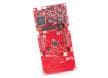
Texas Instruments LAUNCHXL-CC1352R1 LaunchPad Development Kit
Low power radio kit utilizing the CC1352R which enables Sub-1GHz + 2.4GHz in a single chip solution.
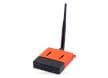
Texas Instruments Kit de etiquetas de sensores LaunchPad para MCU LPSTK-CC1352R
Sensores ambientales y de movimiento integrados, conectividad inalámbrica multibanda y software fácil de usar.
Related Antenna
Johanson Technology 0900AD54B2450 Single Feed IoT Antennas
Multi-band antennas designed for sub-GHz (868MHz to 928MHz) and 2.4GHz frequencies.