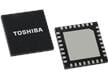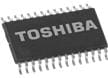

TB9120AFTG(EL)

Toshiba
757-TB9120AFTGEL
TB9120AFTG(EL)

Fabricante:

Descripción:
Motor / Movimiento /Controladores y dispositivos de ignición AEC-Q100 bipolar stepper motor driver 1.4A, 28-VQFN

Modelo ECAD:
Descargue Library Loader gratis para convertir este archivo para su herramienta ECAD. Conozca más sobre el modelo ECAD.

En existencias: 5,931

Existencias:
5,931 Se puede enviar inmediatamente
Mínimo: 1   Múltiples: 1
Precio unitario:
$-.--
Precio ext.:
$-.--
Est. Tarifa:
Empaque:
Envase tipo carrete completo (pedir en múltiplos de 2000)

Precio (USD)

Cantidad Precio unitario
Precio ext.
Cinta cortada / MouseReel™
$3.71 $3.71
$2.80 $28.00
$2.57 $64.25
$2.32 $232.00
$2.20 $550.00
$2.12 $1,060.00
$2.06 $2,060.00
Envase tipo carrete completo (pedir en múltiplos de 2000)
$1.90 $3,800.00
$1.88 $7,520.00
† $7.00 Se agregará y calculará la tarifa de MouseReel™ en su carrito de compras. Ningún artículo de MouseReel™ se puede cancelar ni devolver.

Atributo del producto Valor de atributo Seleccionar atributo
Toshiba
Categoría de producto: Motor / Movimiento /Controladores y dispositivos de ignición
RoHS:  
Stepper Motor Controllers / Drivers
2 Phase
2 A
3 mA
- 40 C
+ 125 C
SMD/SMT
VQFN-28
AEC-Q100
Reel
Cut Tape
MouseReel
Marca: Toshiba
Régimen del voltaje de carga: 4.5 V to 18 V
Número de salidas: 4 Output
Dp - Disipación de potencia : 3.9 W
Tipo de producto: Motor / Motion / Ignition Controllers & Drivers
Cantidad de empaque de fábrica: 2000
Subcategoría: PMIC - Power Management ICs
Voltaje de alimentación - Máx.: 18 V
Voltaje de alimentación - Mín.: 7 V
Productos encontrados:
Para mostrar productos similares, seleccione al menos una casilla de verificación
Seleccione al menos una de las casillas de verificación anteriores para mostrar productos similares en esta categoría.
Atributos seleccionados: 0

                        
Toshiba Electronic Devices & Storage Corporation Automotive products
may be used as engineering samples, however; they are not intended for
volume automotive production or reliability testing without prior
approval by Toshiba Semiconductor and Storage.
Please contact a Mouser Technical Sales Representative for
further assistance.
5-0320-2

USHTS:
8542390090
ECCN:
EAR99

AEC-Q100 Qualified Motor Control Devices

Toshiba AEC-Q100 Qualified Motor Control Devices are a portfolio of pre-driver ICs, H-Bridge drivers, and GATE drivers for automotive brushless and brush motors. The devices are housed in small packages and designed for high-current applications such as electric power steering (EPS). Brushed motor drivers can control a vehicle engine's throttle and other valves. Brushless devices drive a motor with a sine wave current to deliver smooth and quiet motor operation.

Stepping Motor Driver ICs

Toshiba offers stepper motor driver ICs for precision applications commonly found in printers, scanners, actuators, automations, robotics, sorting machines, and many other industrial applications. Toshiba’s technologies include Active Gain Control (AGC), which automatically adjusts the current on demand with respect to the load, minimizing the power loss. The Advanced Dynamic Mixed Decay (ADMD) optimizes the current switching, and the Advanced Microstepping enhances the driving precision with minimum CPU resource. Toshiba stepper motor drivers cover 1.8V to 50V and 0.8A to 5A operation and are offered in a variety of package options.

TB9120AFTG Automotive Stepping Motor Driver

Toshiba TB9120AFTG Automotive Stepping Motor Driver is a constant current, 2-phase, bipolar stepping motor driver with a clock input interface and a PWM constant-current control system. Using stepping motors, the Toshiba TB9120AFTG driver is suited to various automotive and general applications. The AEC-Q100 component uses a wettable flank QFN package with excellent solderability. An advanced functional MCU or dedicated software is not required. Less motor noise and smoother control are achieved, supporting full-step to 1/32-step selectable excitation mode. The PWM constant-current control allows stable output waveforms in mixed decay mode. Upon detecting a stall, a stall detection signal will be received by a microcontroller and fed back into the system.